Pairing the wrong closure with a glass dropper bottle can waste filled product through leakage or leave an assembly that cannot seat correctly. Match the complete neck-finish designation, then verify the closure’s sealing interface and dispensing components against the bottle drawings and actual samples.
For glass dropper bottle closure and neck finish specs, begin with the full bottle finish and the exact closure assembly reference. Bottle capacity alone cannot identify a compatible dropper. Separate the threaded collar, bulb and glass pipette from any reducer insert or plain screw cap, then compare the surfaces that must engage or seal. A matching finish code starts the review; drawing confirmation and formulation trials complete the package decision.
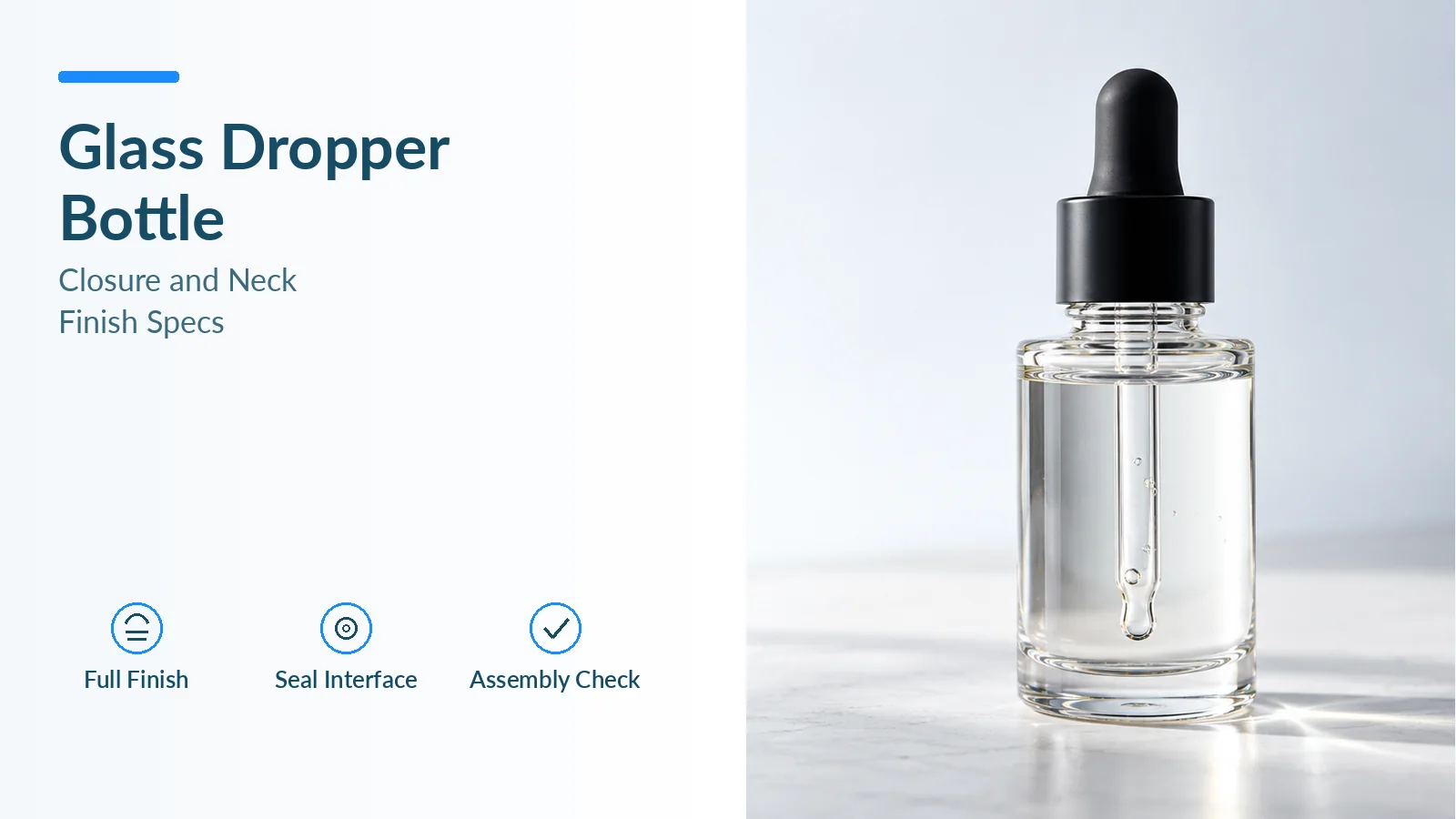
Match the complete finish designation
The bottle and closure need agreement on the full finish designation, including the diameter field and the thread-style field. SKS describes continuous-thread designations using a hyphen or slash, with 18-400 as an example. The first field identifies the diameter designation; the suffix identifies the thread style. Neither field specifies liquid capacity. See SKS’s finish explanation.
SKS’s neck-measuring guide explicitly requires both fields to match. A similar-looking diameter or a cap that begins to turn is insufficient evidence for approval. Retain the designation from the current bottle specification and compare it with the closure specification; use measurements to check the drawing, rather than guessing a finish from appearance.
Berlin Packaging lists its glass-pipette dropper for an 18-400 bottle finish, with a polypropylene collar, glass pipette and rubber bulb. Separately, Cary lists a lined phenolic screw cap with the same finish designation. These listings, accessed October 19, 2026, illustrate different closure mechanisms carrying the same interface label. They establish no approved combination between the suppliers’ components.
Bottle capacity does not select the dropper assembly
Different bottle capacities can share a finish designation. The VWR/Qorpak catalogue provides a direct example in its clear round glass dropper bottle rows:
| Exact catalogue row | Listed capacity | Listed neck finish | Listed pipette material |
|---|---|---|---|
| GLC-05723, clear round glass | 30 mL | 20-400 |
Glass |
| GLC-05724, clear round glass | 60 mL | 20-400 |
Glass |
Source: VWR/Qorpak catalogue, page 7, accessed October 19, 2026. These exact products include attached dropper assemblies. The capacities are catalogue entries for these rows, rather than a rule for all bottles of those volumes.
The shared finish identifies a neck interface; it does not identify the complete pipette assembly. Keep the bottle reference, finish, capacity and assembly reference as separate specification fields. Confirm the pipette’s length reference and its relationship to the bottle bottom on the actual assembly drawings.
Distinguish the dispensing mechanism from the cap
A bulb-and-pipette dropper draws liquid into a tube; a reducer restricts flow from a tipped bottle. A plain screw cap supplies neither mechanism merely by carrying a finish designation. SKS explains the operating difference and separately describes reducer inserts retained within bottle necks.
The comparison below identifies the main interface risk to resolve for each mechanism; it does not rank measured failure rates.
| Closure arrangement | Components to specify | Dominant Failure Mode & Prevention |
|---|---|---|
| Bulb and glass pipette | Threaded collar, bulb, pipette and sealing interface | Collar engagement can be confused with full assembly fit. Confirm seating and pipette clearance on the paired drawings, then check the actual formula in samples. |
| Screw cap with orifice reducer | Threaded cap and separate neck insert | The external threads can agree while the insert’s internal fit remains unresolved. Check the controlled bottle opening and the supplier’s insert installation method. |
| Plain lined screw cap | Cap shell, liner and intended bottle sealing surface | A finish match can be mistaken for sealing approval. Confirm the liner-to-bottle interface and formulation compatibility before release. |
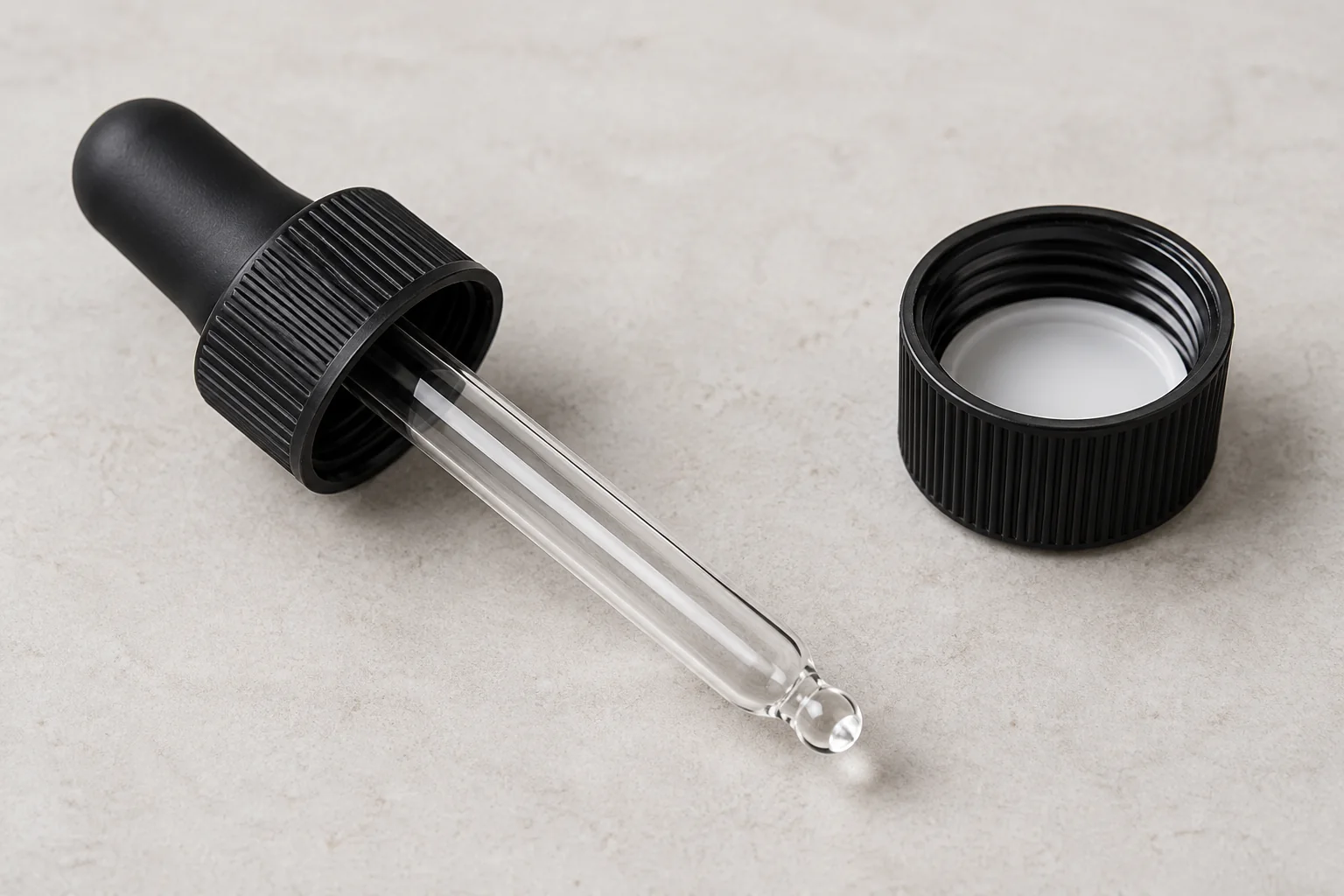
Assembly methods also belong to the exact product system. For the SKS Euro-dropper arrangement described by the supplier, securing the cap pushes its reducer into the neck. That instruction does not establish an installation method for every insert or screw cap. The same supplier distinguishes bulb droppers with the pipette attached to the cap and bulb.
Compare the neck and sealing drawings
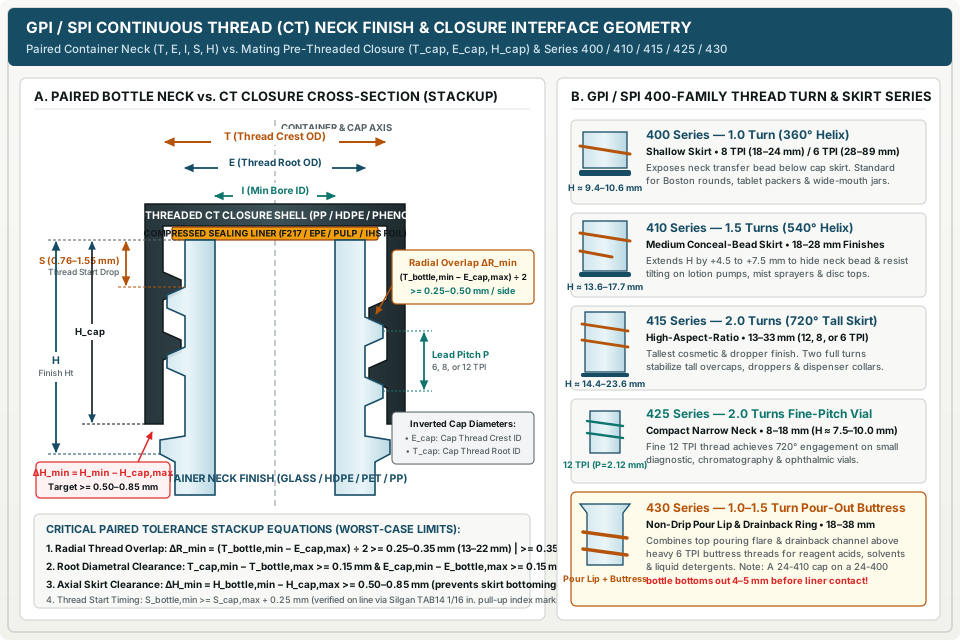
Review the outside threads and the internal opening separately. Berlin Packaging’s neck-finish guide defines the drawing dimensions as follows:
- T: outside diameter across the threads; its tolerance affects the bottle-to-closure fit.
- E: outside diameter of the neck, distinct from the thread crests.
- I: internal neck opening. Berlin identifies controlled I as necessary for plug seals and dispensing fitments.
- H: finish height, measured from the neck top to the shoulder intersection of the projected T diameter; it is not overall bottle height.
- S: distance from the finish top to the top edge of the first thread, affecting engagement and closure orientation.
Use the supplier’s actual dimensions, tolerances and drawing revisions for the proposed assembly. A finish label does not supply those values, and an external thread match does not establish an insert’s internal fit.
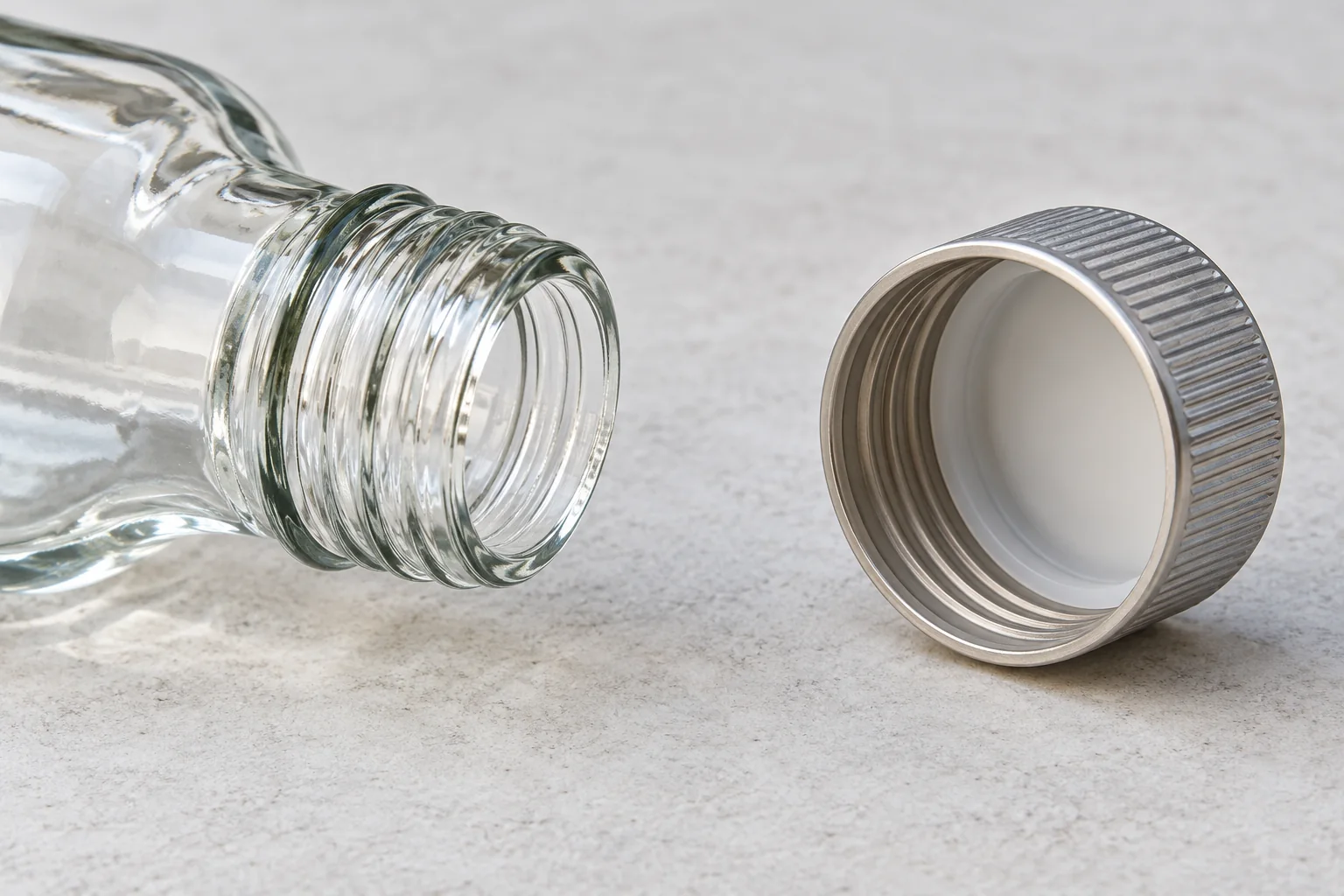
Rules of thumb: If either finish field differs or is unknown, hold compatibility approval until the exact assembly is confirmed. If the measured internal opening I falls outside the insert supplier’s approved drawing limits, hold insert approval even when the external finish codes agree. Establish the physical bore-fit tolerance directly from the controlled bottle and insert drawings.
For a broader drawing-pair review, use the bottle neck finish compatibility checklist.
Release a specific bottle-and-closure combination
Approve the complete package with the intended formulation and application conditions. SKS notes that formula viscosity changes dropper and reducer behavior, while Berlin’s dropper listing calls for product-compatibility testing before production. The word “dropper” alone establishes no fixed drop volume.
Retain the following information with the release decision:
- Bottle and closure references, complete finish designations and drawing revisions.
- The intended sealing interface, liner or insert reference, and bulb material grade where applicable.
- Pipette dimensions, reference datums and supplier-confirmed bottom clearance.
- Actual-formula sample observations covering seating, sealing, dispensing and opening under the agreed conditions.
- Supplier application instructions, the approved torque window, and the agreed storage and transport checks with their acceptance criteria.
Set those conditions for the actual package. Use the cap torque testing guide when defining the application and opening checks; increasing torque is not a substitute for resolving a component mismatch. If a component or drawing changes, review whether the prior approval still covers the combination.
Technical basis and scope
This reference synthesizes supplier finish definitions, component specifications, and catalogue rows from SKS Bottle & Packaging, Berlin Packaging, The Cary Company, and VWR/Qorpak. Verify final production dimensions and application torque against the controlled package specification. Continue with the bottle neck finishes guide for related interface decisions.