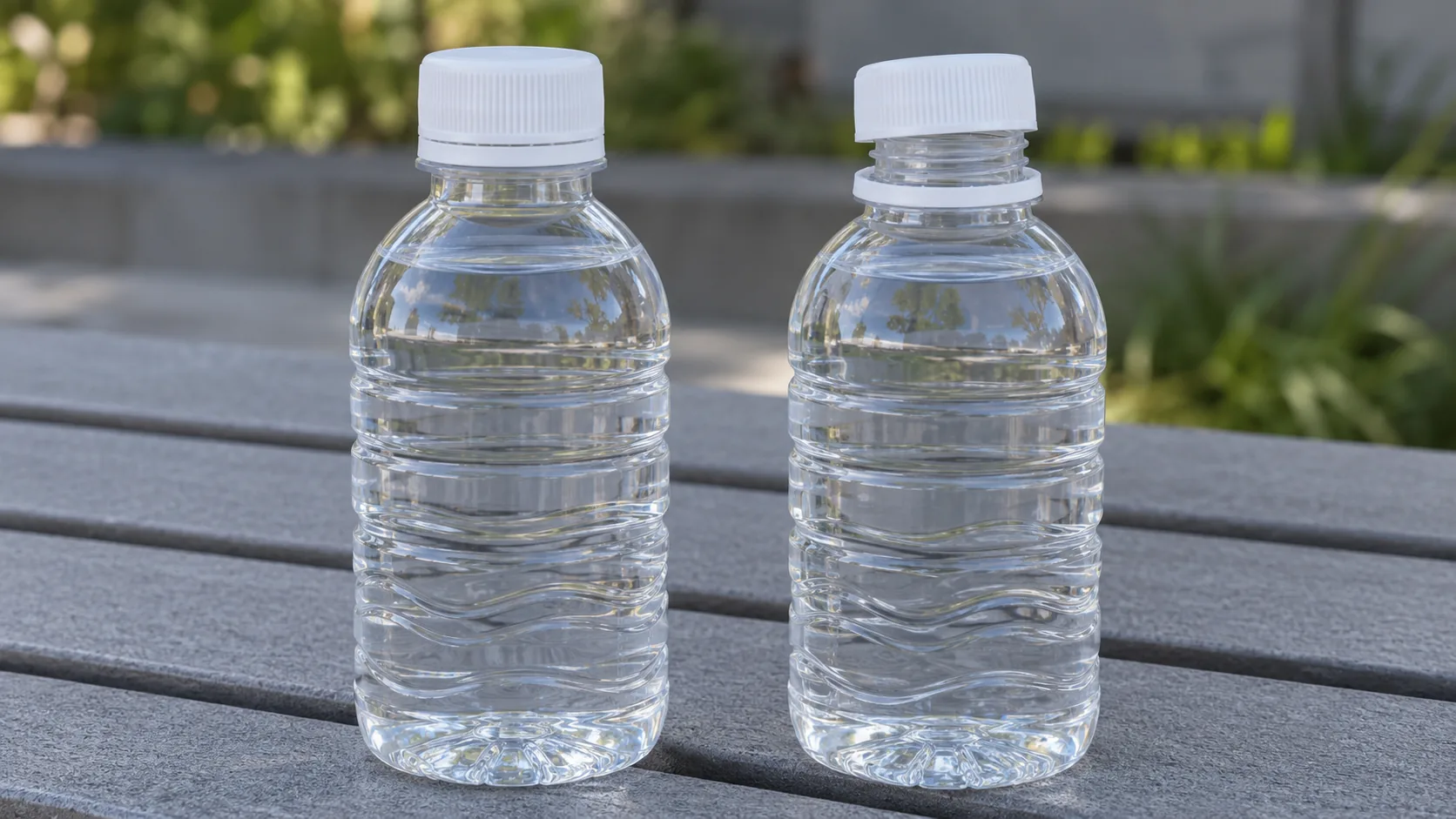
A torque value without a test history can send a capper adjustment in the wrong direction. Keep the closing input separate from the opening measurement, and define the event that the tester should record.
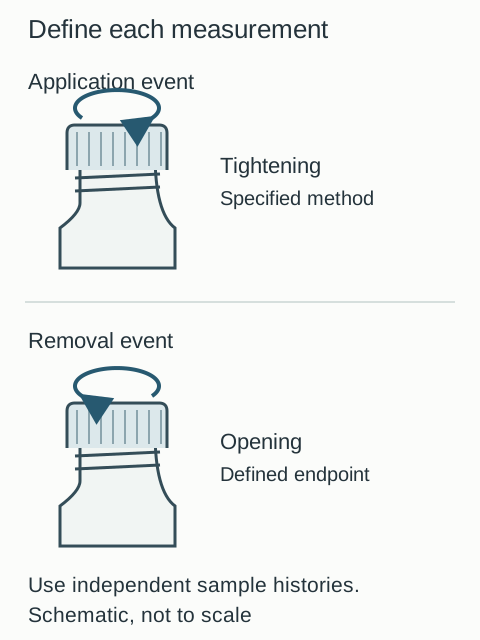
Application and removal describe different events
Application torque concerns tightening the closure. Removal torque concerns opening the assembled package after whatever holding and conditioning the protocol requires. A capper setting is also not automatically a direct measurement of torque at the cap. Identify the origin of each value in the record.
Mark-10’s TT01 manual describes a tester for bottle-cap application and removal torque. It also describes clockwise and counter-clockwise peak modes and first/second peak functions. That distinction matters when an opening sequence contains more than one event, such as initial movement and a later tamper-evident feature breaking. State which event is your endpoint before comparing results from different operators or instruments. For a plastic band, the order of pull-up, removal torque and band-break torque is the subject of the tamper-evident band note.
| Record label | What it means | Keep separate from |
|---|---|---|
| Capper recipe or setting | The machine’s selected operating input | A measured application value |
| Measured application torque | Reading during the specified tightening method | A later removal reading |
| Initial opening peak | Defined first opening event | Band break or a later peak |
| Later peak | Another defined event during opening | An unspecified maximum across the entire sequence |
Fix the sample without changing it
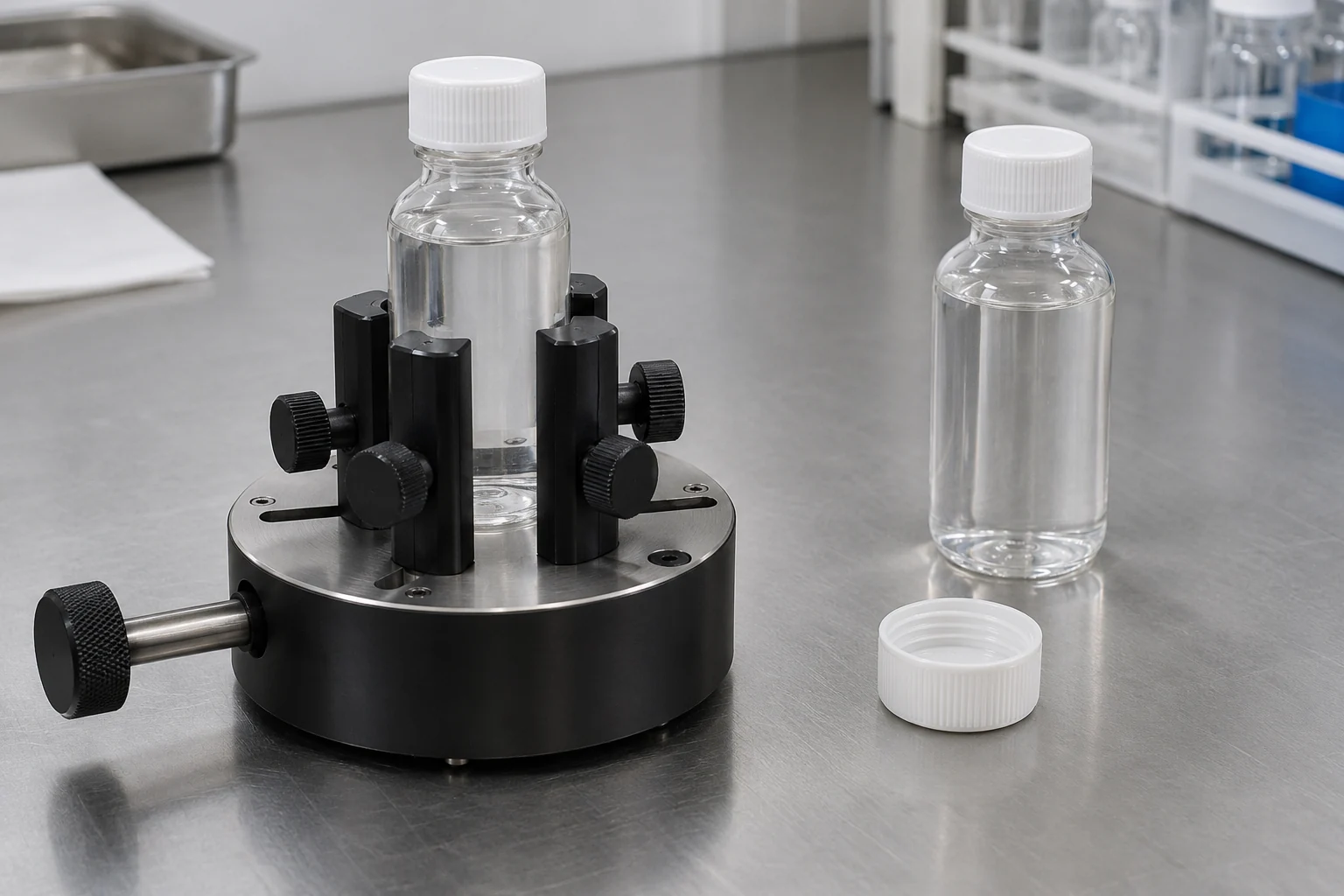
Centre the closure axis over the tester’s loading axis and grip the sample firmly enough to prevent rotation. The TT01 manual warns that excessive tightening can deform thin-walled samples and affect results. It also warns about off-centre loading. A fixture that prevents slip by crushing the bottle can therefore create a new measurement problem.
Use the instrument manual for its capacity, safety checks and setup. Confirm units and the selected peak mode, then zero according to the documented procedure. Record the fixture and contact position so that another operator can reproduce the arrangement. If a sample slips or the cap is driven at an angle, mark that result invalid and explain why; do not silently remove it from the run.
Control the time between capping and testing
Use the interval and conditioning specified for the package evaluation. Record both capping time and test time instead of relying on a label such as ‘later’. Because liner compression relaxation and thread friction evolve after capping, removal torque must be measured at the specific holding intervals defined in the package specification.
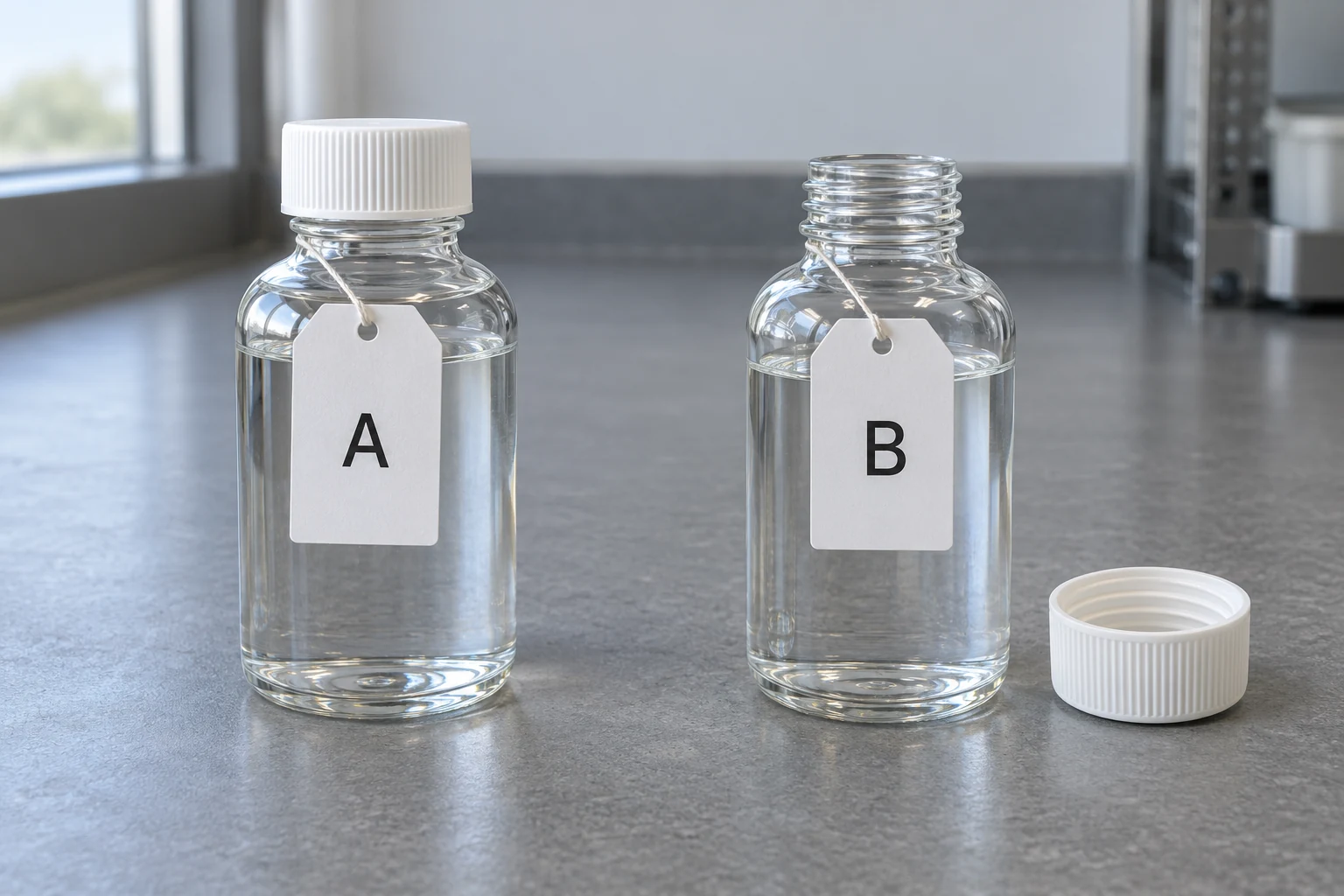
Use fresh specimens for comparisons unless the approved procedure specifically calls for repeated opening. Once a closure has been opened, it has a different history. Keep bottle lot, cap lot and liner identity with the specimen. If a result changes, investigate those variables before attributing the entire shift to the machine.
Copy this blank test record
Duplicate this form for each specimen. Keep the field guidance and fill the blank entry column; do not combine specimens with different opening histories. Enter limits from the agreed package specification and retain its revision.
Record both timestamps with date and time zone. Calculate elapsed minutes as (test timestamp minus capping timestamp) in minutes so that immediate post-cap checks remain distinct from 24-hour or post-conditioning removal checks.
| Field | Guidance | Your entry |
|---|---|---|
| Specimen ID | Unique identity for this record | ____ |
| Bottle / cap / liner lots | Keep each component reference | ____ / ____ / ____ |
| Opening history | Unopened, previously opened or other documented history | ____ |
| Closing method / recipe / head | Separate machine input from measured application torque | ____ / ____ / ____ |
| Capping timestamp | Date, time and time zone | ____ |
| Test timestamp | Date, time and same time zone | ____ |
| Elapsed interval | (test - capping), minutes | ____ min |
| Conditioning / fill state | Record actual conditions and method reference | ____ / ____ |
| Tester / fixture | Instrument ID and gripping arrangement | ____ / ____ |
| Calibration reference | Instrument record reference | ____ |
| Direction / endpoint | Application, first opening peak, band break or defined later event | ____ / ____ |
| Measured value | Numerical reading for that endpoint | ____ |
| Unit | Record the instrument unit; compare like units | ____ |
| Limit / unit / specification revision | Supplied package requirement, not a generic chart | ____ / ____ / ____ |
| Disposition | Pass, fail, invalid or unresolved against that reference | ____ |
| Exception / retained sample location | Slip, off-axis loading or other interruption; storage reference | ____ / ____ |
Download the specimen-record TSV template to log individual specimen IDs, capping and testing timestamps, peak mode settings, and package specification limits.
Review the individual results as well as a summary. A mean can hide a problem tied to a particular capping head, cap cavity or sample group. Use those identifiers only where you can trace them, and retain anomalous samples for investigation.
Decide what torque cannot establish
A package may require leakage, tamper evidence or dispensing checks as well. Define those separately with the relevant supplier. An acceptable opening reading alone does not establish performance under transport or the intended storage conditions.
For unexplained variation, revisit the neck-finish and sample checks, the diameter-indexed GPI/SPI continuous thread closure dimensions and torque tables, the application mechanism, and for roll-on aluminium shells the ROPP capper head adjustment guide. The closure torque section keeps the measurement task distinct from equipment selection.