A capper can run smoothly and still produce a package that fails its sealing requirement. Select the closing action first, then evaluate how the machine handles your actual cap and bottle together.
Match the mechanism to the closure
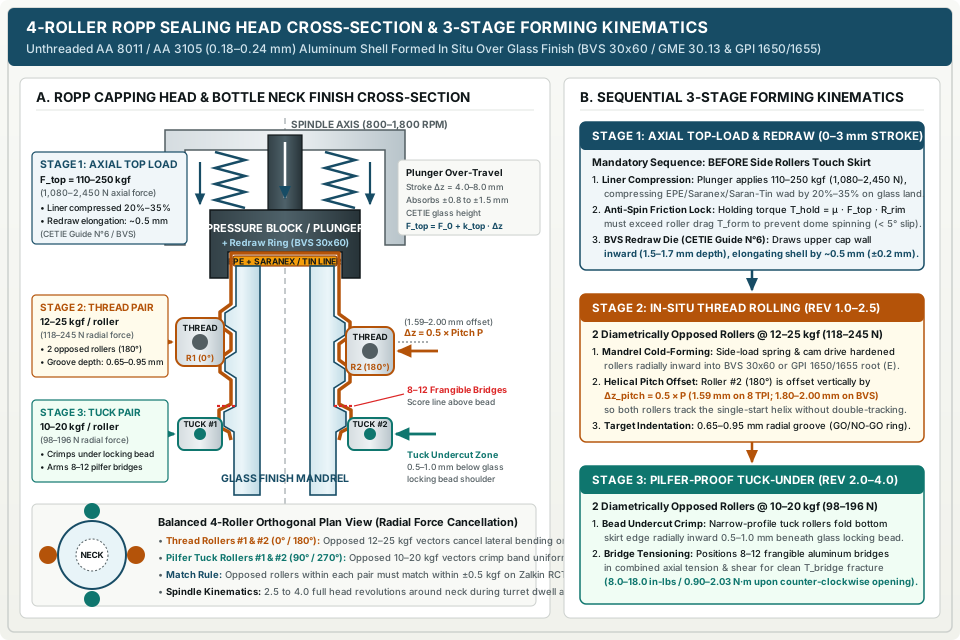
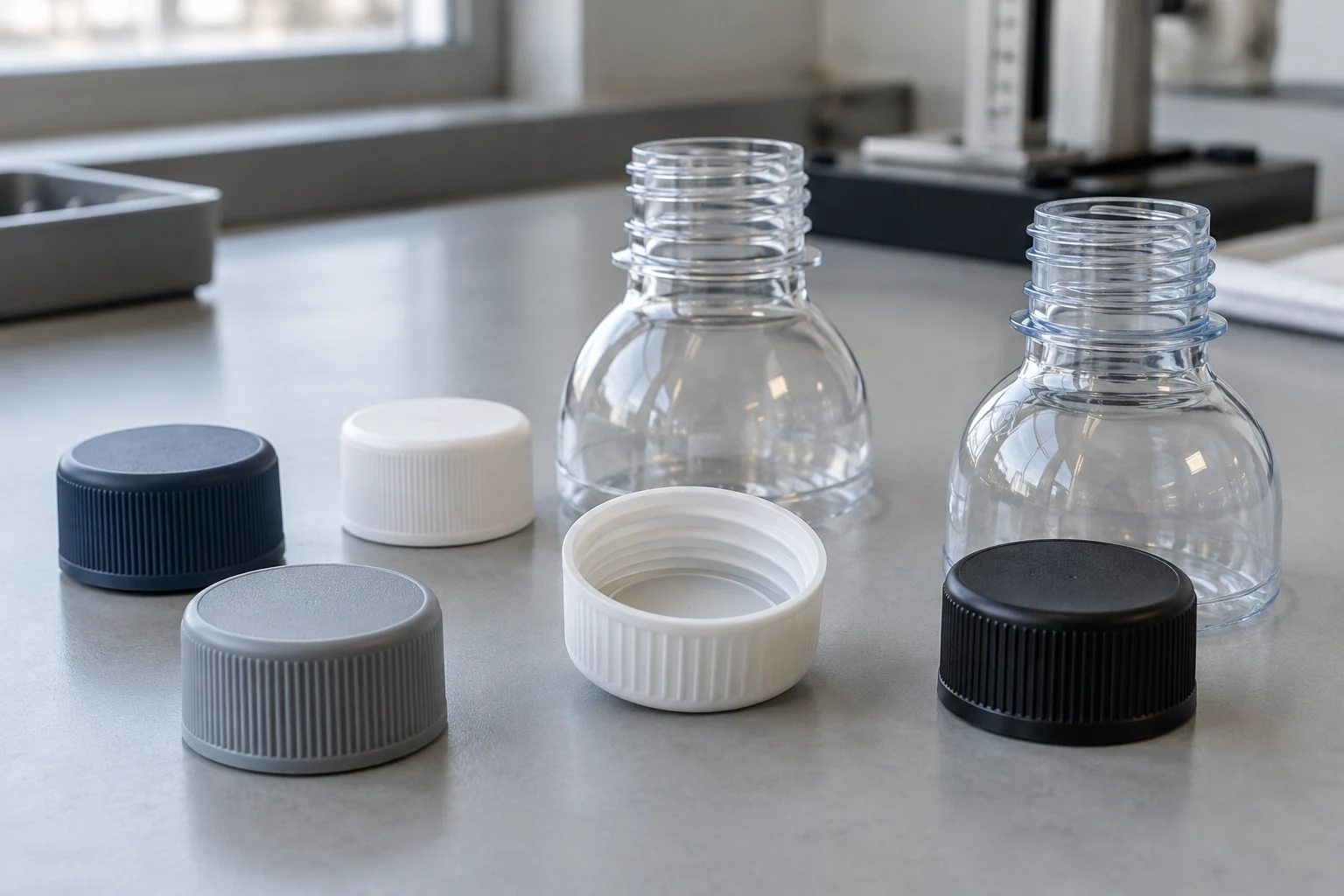
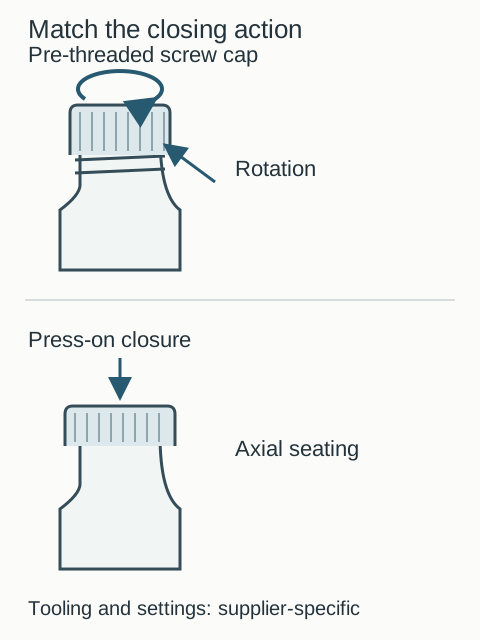
Pre-threaded screw caps need controlled rotation. Press-on closures need an appropriate seating action, while roll-on aluminium wine closures use tooling that forms the metal against a compatible finish. These are different package operations. A supplier’s diameter range alone cannot establish that one operation can replace another.
Accutek’s published spindle-cap description separates cap organisation and placement from tightening. It describes side spindles turning the cap while gripper belts hold the bottle. Accutek’s chuck-capper documentation describes vertical head engagement with dedicated chucks matched to the closure profile. Use these mechanical distinctions to narrow candidate architectures and confirm the exact gripping tool and closing sequence with the OEM.
| Closure requirement | Candidate to investigate | Evidence that should decide the choice |
|---|---|---|
| Pre-threaded screw cap with accessible outer wall | Spindle tightening or a matching chuck | Sample trial showing seating, grip marks and agreed opening behaviour |
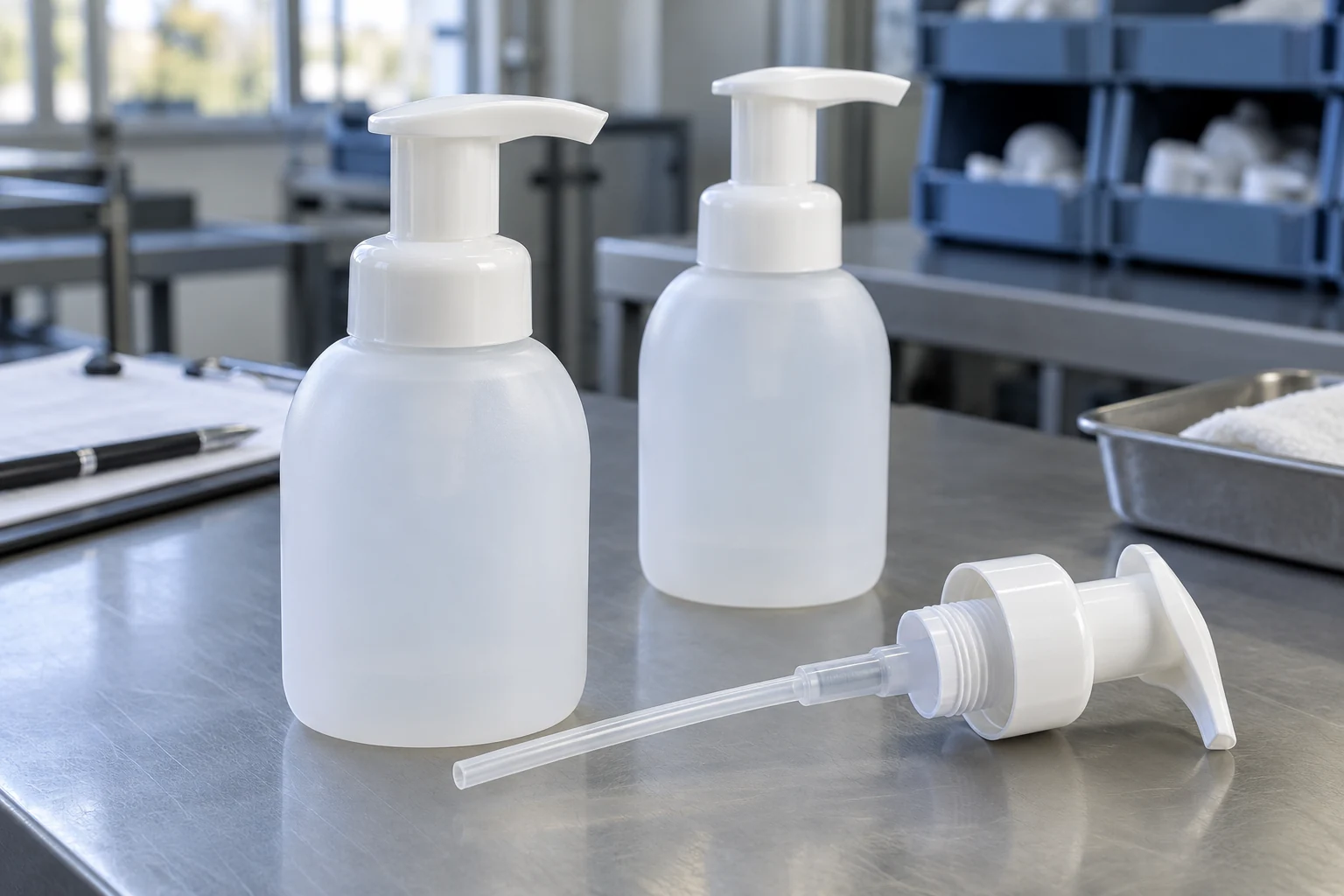
| Pump, spout or unusual top geometry | Tooling that reaches the intended driving surface | Clearance drawing and trial with the complete dispenser |
| Press-on or snap closure | A compatible pressing arrangement | Seating position and package retention checks from the supplier specification |
| Roll-on aluminium wine closure | A closure-specific roll-on head | Bottle finish, liner and application specification approved as a set |
Write the package brief before the machine brief
Send a complete sample set rather than a loose cap. Include the bottle drawing, cap drawing and revision, resin or glass type, closure sealing design and any liner. Identify which surface the closure supplier permits the machine to grip. An actuator that turns for dispensing or locking can introduce a separate motion from the collar that attaches the pump to the bottle.
Describe the operating state too. An empty bottle may behave differently from the filled package under the intended handling conditions. Ask the supplier which fill state and environmental conditions the demonstration represents. Where a hygienic or product-contact requirement matters, ask for the relevant materials and cleaning documentation; do not infer suitability from a stainless-steel frame.
Resolve the bottle-to-closure drawing match before using a torque adjustment to compensate for uncertain fit.
Separate feeding faults from closing faults
Watch the cap at the feeder discharge, at first engagement with the bottle and after tightening. A cap that arrives tilted presents a different problem from one that arrives squarely but slips during tightening. Retain failed packages with their position in the sequence recorded. That makes the next adjustment testable.
Ask the supplier to demonstrate replenishing the hopper and restarting after a controlled stop under its operating instructions. Define what counts as a good finished package, how rejects are counted and what intervention ends the uninterrupted run. A headline throughput figure without that boundary is difficult to compare.
Use an acceptance record that connects inputs and results
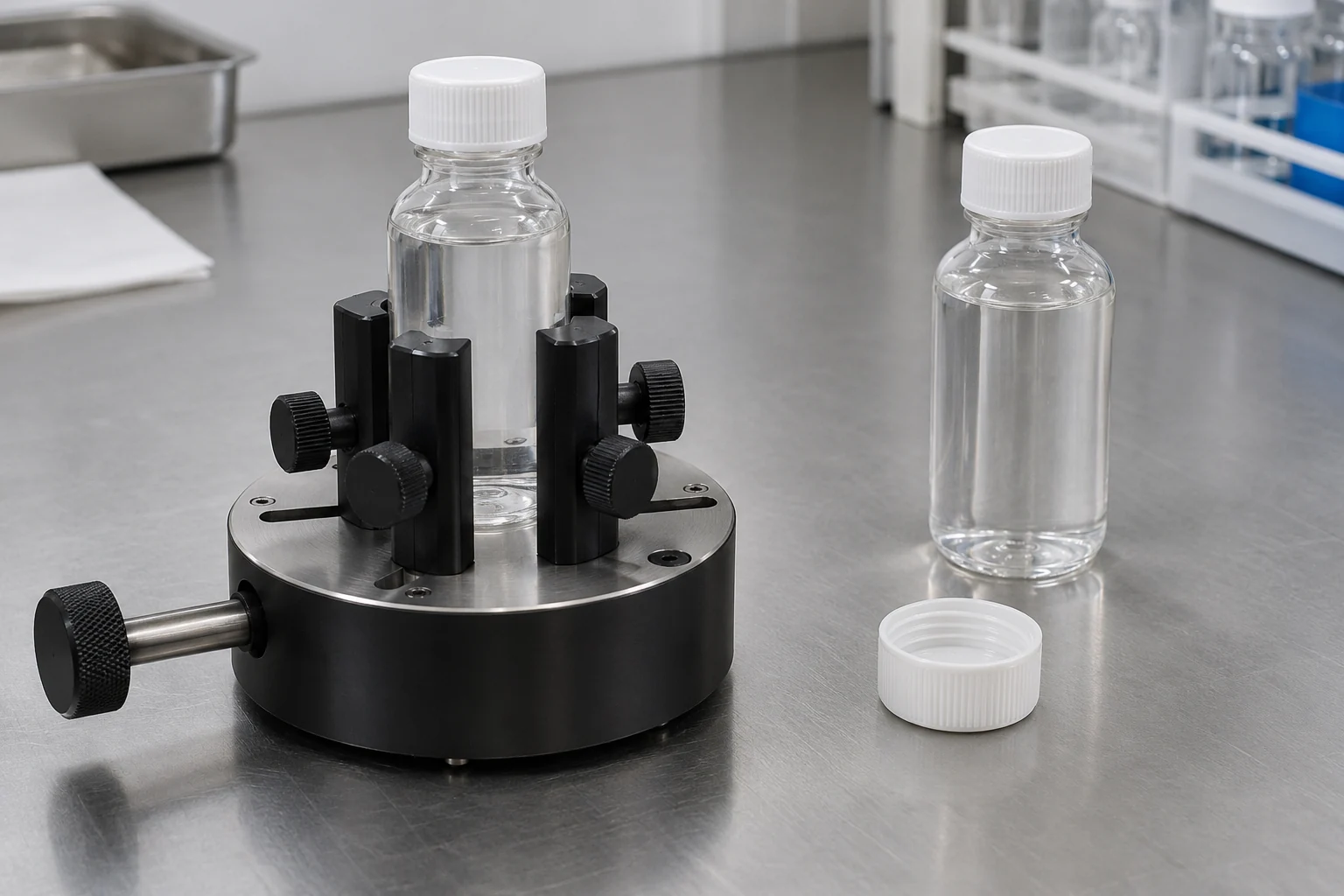
Agree the acceptance criteria with the bottle and closure suppliers before the trial. Record results against each package combination rather than averaging unlike closures into a single result.
| Trial record | What to enter |
|---|---|
| Package identity | Bottle and cap references, drawing revisions and lots |
| Application setup | Head or spindle tooling, bottle support and recipe reference |
| Handling observation | Orientation, first engagement, stoppages and visible scuffing |
| Closure evidence | Seating, opening endpoint, leakage method and tamper feature where applicable |
| Decision | Accepted combination, unresolved fault, owner and repeat-trial condition |
A removal-torque measurement is one part of that evidence. Our torque testing guide explains how to keep application settings separate from later opening readings. When configuring a 4-roller head for unthreaded aluminium shells, follow ROPP capper head adjustment to calibrate top-load springs alongside thread and pilfer-proof tuck rollers. For a pump change, the mono-material foamer qualification guide identifies the specification checks to resolve first. Continue in capping machinery.