Changing a wine closure can change both the bottle specification and the bottling operation. Start with the sealing interface: a cylindrical stopper works in the bore, while a wine screw-cap system uses a compatible external finish and liner.

Compare application tasks before choosing equipment
Natural and technical corks, synthetic cylindrical stoppers and aluminium screw caps are closure families with different component and application requirements. A supplier’s closure specification defines the required bottle finish geometry, application tooling, and line release checks.
| Closure family | Interface to confirm | Bottling operation to investigate |
|---|---|---|
| Natural or technical cylindrical cork | Bottle bore and stopper specification | Compatible cork compression and insertion tooling |
| Synthetic cylindrical stopper | Approved bore and stopper geometry | Supplier-approved insertion setup and extraction checks |
| Roll-on aluminium screw cap | Bottle rim, external finish and liner | Closure-specific top pressure and forming rollers |
| Other closure designs | The closure maker’s complete interface drawing | Dedicated application and inspection requirements |
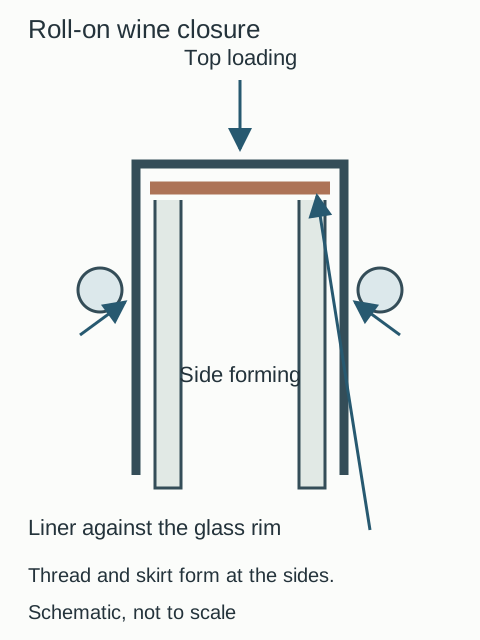
Do not treat a long-skirt aluminium closure as a plastic screw cap that merely needs tightening. AWRI describes a process in which a pressure pad loads the liner against the rim, thread rollers form the metal against the bottle finish and tuck rollers form the skirt under the locking bead. The functions are related but separate; see ROPP capper head adjustment for 4-roller top-load, redraw and lateral roller force calibration.
A thread that looks correct does not prove the seal
The metal shell retains the liner and provides the opening structure, but AWRI identifies the disc against the glass rim as the seal. Inspect the assembled position and forming features under the closure supplier’s procedure. A visually recognisable thread does not by itself establish suitable liner compression.
Ask which checks belong at setup and which need later conditioned samples. The approved process may include package integrity, opening and tamper-feature checks. Identify each endpoint. Do not substitute a general opening-torque table for the current specification for your closure, glass finish and liner.
Changing from cork requires a bottle review
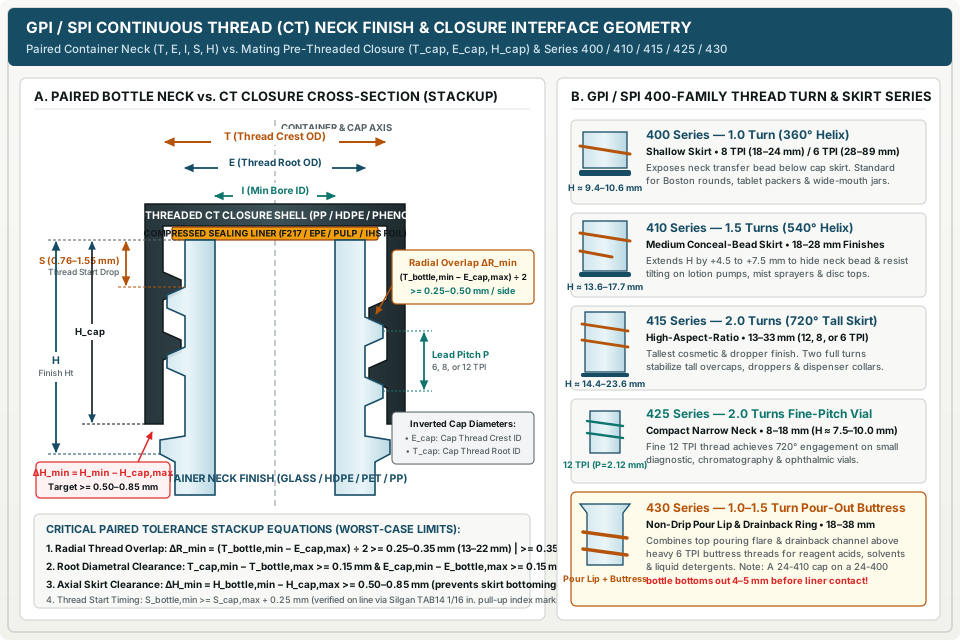
A bottler should obtain the new bottle and closure drawings before assuming existing glass can be used. Check the finish, bore where relevant, available head clearance and how the bottle will be supported during application. Confirm the intended closure with the bottle maker and the line-equipment supplier.
The same principle applies when replacing one stopper with another. A common family name does not establish identical insertion settings or extraction behaviour. Request the current technical instructions and define the sample trial around the actual stopper and bottle combination.
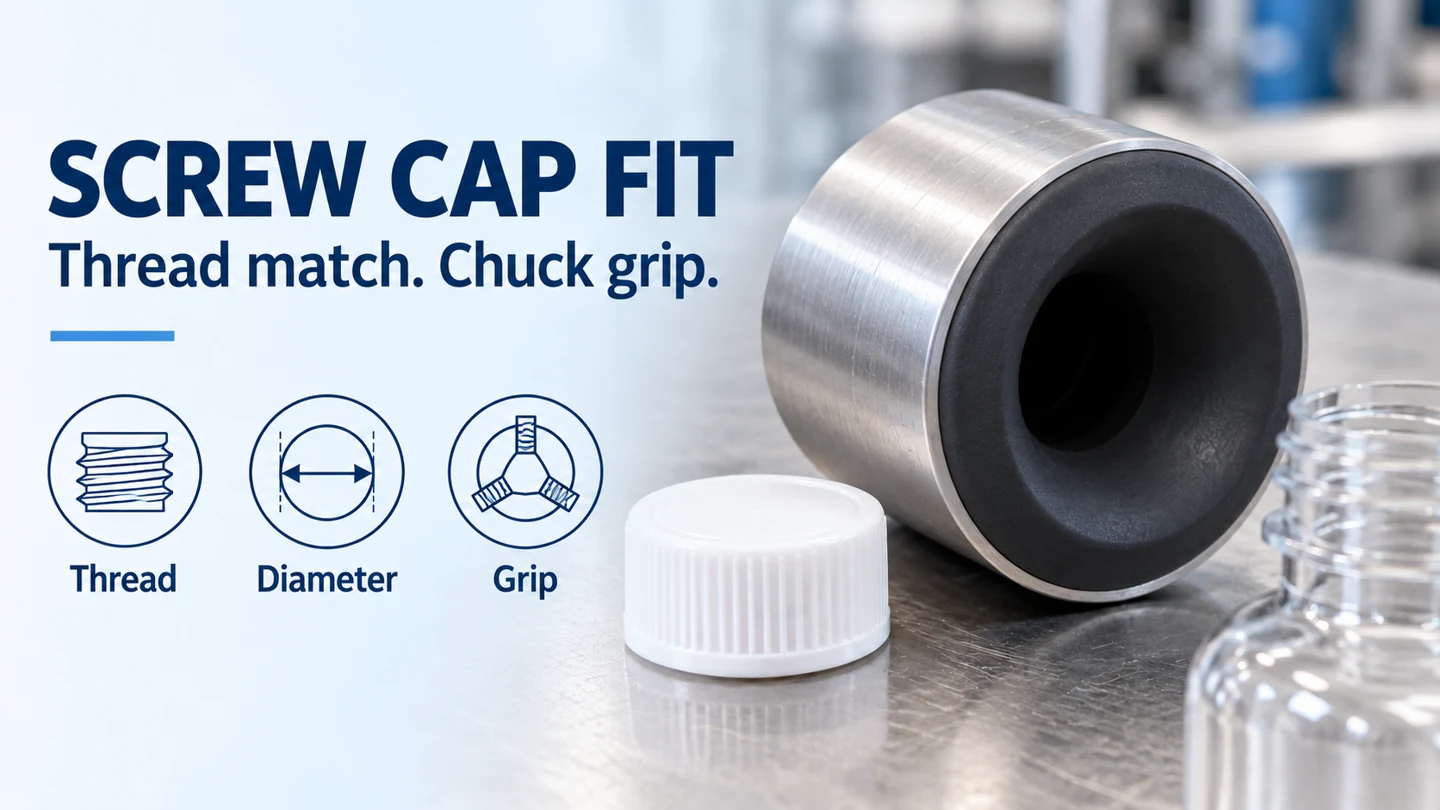
The plastic screw-cap samples below illustrate why familiar threads can be misleading: their application task differs from forming a wine cap on glass. Compare the actual closure family, not just a threaded appearance.

Use a closure-change worksheet
This worksheet records the unresolved decisions before a conversion. Complete it for each package, and keep the trial samples with their glass and closure lot identities.
| Change item | Evidence to request | Acceptance question |
|---|---|---|
| Bottle and closure | Current drawings and finish references | Have suppliers approved the combination? |
| Liner or stopper | Component grade and application instructions | Is it suitable for the intended wine and storage task? |
| Tooling and support | Head, rollers or insertion-tool references | Can the line apply it under the approved conditions? |
| Inspection | Defined visual features and functional methods | Can a defective application be detected and retained? |
| Opening | Method, conditioning and endpoint | Does the package meet its agreed opening requirement? |
| Change control | Approved setup and retained sample references | Which future change triggers another trial? |
Run the line evaluation with the relevant equipment personnel. Retain specimens from the beginning and end of the agreed run and any rejected applications. If a forming defect appears, record the affected feature and head position where traceable. Use that evidence to investigate the cause instead of changing multiple adjustments at once.
For general drawing checks, read bottle neck finish compatibility. For opening measurements, distinguish the measured event using the torque test record. The bottle neck finishes section groups the related interface checks.